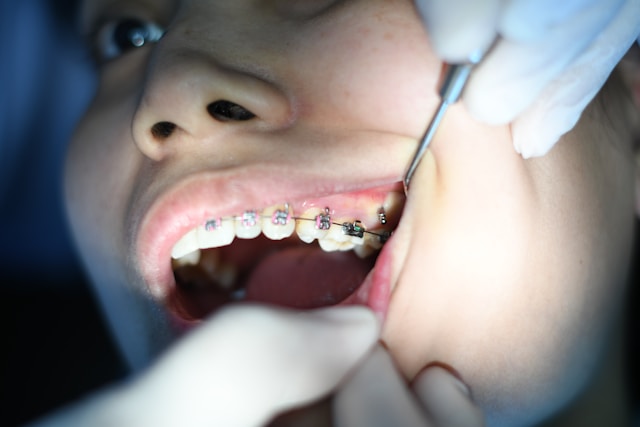
Planning orthodontic treatment can feel uncertain. You want clear answers before you commit to months of care. Orthodontic tracings give you that clarity. These simple line drawings come from your X‑rays. They show how your teeth, jaws, and facial bones relate to each other. Then your provider uses them to measure, compare, and predict change. That means fewer surprises for you. It also means a treatment plan that fits your mouth, your health, and your goals. A North San Antonio dentist can use tracings to spot hidden problems early, choose the safest path, and track progress with precision. You see where you are starting. You see where you are heading. You also see how each step supports your long term oral health. The result is treatment that feels thoughtful, clear, and steady from the first visit to the final result.
1. Clear picture of your teeth and jaws
Orthodontic tracings turn complex X‑ray images into clear lines. You see the shape and position of your teeth. You also see the outline of your jaws and facial bones.
This clear picture helps in three ways:
- You understand why treatment is needed
- Your provider spots patterns that an unmarked X‑ray can hide
- Your family can ask simple questions with a shared picture
Many providers use tracings on cephalometric X‑rays. These side-view images of the head are common in orthodontics. The National Institutes of Health explains how cephalometric X‑rays support orthodontic care in studies you can view through NCBI resources.
2. Early detection of hidden problems
Tracings do more than show crooked teeth. They show how your bite fits. They also show how your upper and lower jaws line up with the rest of your face.
With tracings, your provider can notice:
- Jaw growth that does not match on each side
- Teeth that may stay trapped under the gums
- Open bites or deep bites that strain the jaw joint
Early treatment is often simpler. It can guide jaw growth in children. It can also prevent more complex surgery in adults. The American Dental Association explains how X‑rays support early orthodontic decisions.
3. More precise and safer treatment plans
Orthodontic tracings turn your X‑ray into numbers. These numbers come from measuring angles and distances between key points on the teeth and bones. The process looks simple on paper. The effect on your plan is strong.
With these measurements, your provider can:
- Choose braces or aligners that match your bite
- Estimate how far teeth can move without harming roots
- Plan extractions only when they are truly needed
This reduces guesswork. It supports safer force levels on teeth. It also supports a better balance between your teeth and your face.
4. Easier progress tracking and plan changes
Treatment rarely follows a straight line. Teeth move at different speeds in each person. Growth changes plans for children and teens. Life events can cause missed visits or broken appliances.
Tracings help your provider track progress in three clear steps:
- Baseline tracing at the start of treatment
- Follow up tracings during key stages
- Final tracing when treatment ends
By comparing these tracings, your provider can see if teeth move as expected. If movement is slow or off track, the plan can change in a targeted way. That keeps treatment focused and steady instead of reactive.
5. Better communication for your whole family
Orthodontic treatment affects daily life. It affects eating, speech, school photos, and family budgets. Clear communication matters. Tracings turn complex details into a simple visual story your family can follow.
Tracings support better talks in three ways:
- You see the problem, not just hear about it
- You see the planned change, step by step
- You see proof of progress over time
Children often respond well to seeing their own tracings. They gain a sense of control and purpose. That can support better brushing, elastic wear, and appointment follow-through.
Comparison: Treatment planning with and without tracings
| Planning method | What you see | Risk of surprise | Ease of progress checks
|
|---|---|---|---|
| No orthodontic tracings | Photos and plain X‑rays without clear labels | Higher. Hidden jaw or bite issues can be missed | Hard. Changes are harder to compare over time |
| With orthodontic tracings | Labeled line drawings with measurements | Lower. Jaw, tooth, and bite issues are mapped | Easy. Tracings can be stacked and compared |
What to ask your provider about tracings
You have the right to understand your treatment. You also have the right to see your own records. When you meet with your orthodontist or dentist, you can ask:
- Will you use orthodontic tracings for my case
- Can you show me the tracing and explain the main points
- How often will you repeat tracings during treatment
- How do the measurements guide your choices
If you do not understand a line or label, ask for a simple explanation. A clear answer is a sign of respect for you and your family.
Key takeaway for your treatment planning
Orthodontic tracings do not add drama to your care. They remove it. They turn complex images into a clear map. They support early detection of problems. They guide safer and more exact plans. They also give you a shared picture for honest talks about goals, risks, and results.
When you plan orthodontic treatment, ask how tracings will support your case. That question alone can lead to stronger choices and a calmer path from the first X‑ray to your final smile.
EddieWhota says
I’ve been exploring https://terpenewarehouse.com/products/granddaddy-purple-terpenes recently, and I’m really enjoying the experience. The scents are rich, typical, and pleasant. They annex a outgoing be a match for to my daily habit, dollop fasten on the atmosphere and atmosphere. A massive find for anyone who appreciates perfumed wellness tools.