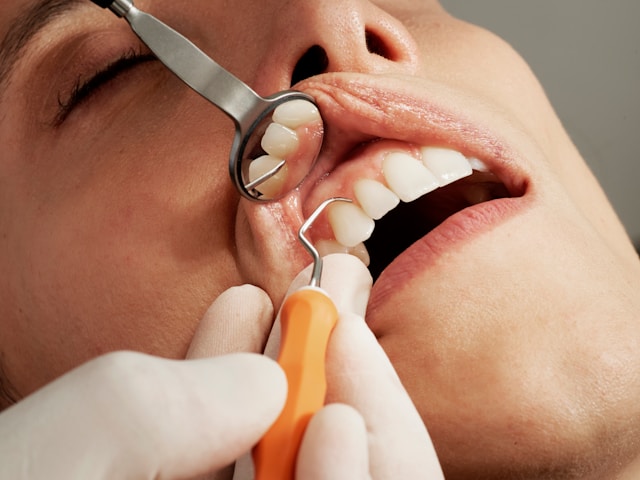
You may think a routine checkup only finds cavities. It does much more. General dentistry often gives the first warning that oral cancer is starting. You may not feel pain. You may not see changes in your mouth. Yet a trained eye can see small spots, rough patches, or color changes that point to early disease. Regular visits let your dentist compare what your mouth looked like before. Then small changes stand out. This can save time, money, and in some cases, your life. A Palm Beach Gardens dentist checks your teeth, gums, tongue, cheeks, and throat at every visit. That simple habit can catch cancer before it spreads. Early detection often means simpler treatment, less time away from work, and a stronger chance of recovery. You deserve that level of care every time you sit in the chair.
What Oral Cancer Is And Why It Hides
Oral cancer is a growth in the lips, tongue, cheeks, gums, roof of the mouth, or throat. It often starts small. It can look like a tiny sore that does not heal. It can look like a pale patch or a dark spot. Many people ignore it. They think it is a bite mark or a cold sore.
That is the danger. Early oral cancer often causes no pain. You may eat, drink, and talk without any change. By the time pain starts, the growth may be larger. It may spread to the neck or other parts of the body.
You need someone who sees the inside of mouths every day. That person can spot the quiet signs long before they grow.
How General Dentists Check For Oral Cancer
Every routine visit should include a short but careful cancer check. It does not hurt. It takes only a few minutes. Yet it can change the course of your health.
Your dentist will usually:
- Look at your lips, cheeks, and gums
- Check the top and sides of your tongue
- Lift your tongue to see under it
- Look at the roof and floor of your mouth
- Check the back of your throat
- Feel your jaw and neck for firm lumps
Next, the dentist may use a light or special dye to see changes that are hard to notice with the eye alone. The goal is simple. Find any spot that looks new, rough, thick, crusted, or that bleeds easily.
If anything looks suspicious, the dentist may take a small sample called a biopsy or send you to a specialist. That step gives a clear answer.
Why Routine Dental Visits Matter For Early Detection
Oral cancer risk grows with age. It also rises with tobacco, heavy alcohol use, and some viral infections. Yet anyone can get it. Even people with no known risk can face it.
Regular visits create a record of your mouth. Each time you sit in the chair, the dentist compares today with last year. That pattern matters more than any single visit.
According to the National Cancer Institute, early-stage oral cancer often has a much higher survival rate than late-stage disease. Early care can also mean:
- Smaller surgery
- Less need for radiation or other treatment
- Better chance to keep normal speech and chewing
You gain more than healthy teeth. You gain another line of defense against cancer.
Signs You And Your Dentist Should Never Ignore
You see your mouth every day. Your dentist sees it a few times a year. Both views matter. You should call your dentist if you notice any of these signs that last more than two weeks:
- A sore that does not heal
- White or red patches
- A lump or thick spot in the cheek, lip, or tongue
- Numbness in the tongue or mouth
- Jaw pain or stiffness when you open wide
- Feeling like something is stuck in your throat
- Changes in your voice or trouble swallowing
These signs do not always mean cancer. Many come from other causes. Still, they demand a check. Quick action is always safer than delay.
How Often You Should See A General Dentist
Most people need a dental visit every six months. Some people with gum disease or high cavity risk may need more visits. Your dentist will tell you what is right for you.
Try to keep three steady steps:
- Brush twice a day
- Floss once a day
- See your dentist at least twice a year
These simple habits lower your risk of tooth loss. They also raise your chance of catching cancer early.
Risk Factors And The Power Of Prevention
You cannot change your age or your family history. You can change some other risks. The Centers for Disease Control and Prevention lists common risks for oral cancer. These include:
- Smoking or chewing tobacco
- Heavy alcohol use
- Too much sun on the lips
- Human papillomavirus infection
You can lower your risk if you:
- Quit tobacco and avoid secondhand smoke
- Limit alcohol
- Use lip balm with sun protection
- Ask your health care team about HPV vaccines for your children
Then pair these choices with steady dental care. That mix gives strong protection.
Comparison Of Outcomes With And Without Regular Dental Visits
The table below shows how routine general dentistry can change oral cancer outcomes. The numbers give an example pattern. Exact figures vary by person and diagnosis.
| Factor | Regular dental visits | Rare or no dental visits
|
|---|---|---|
| Stage when cancer is usually found | Earlier stages I or II | Later stages III or IV |
| Size of growth at diagnosis | Smaller and more local | Larger and more spread |
| Type of treatment often needed | More minor surgery | More complex surgery and added treatments |
| Time away from work or school | Shorter | Longer |
| Impact on speech and chewing | Lower chance of lasting change | Higher chance of lasting change |
| Emotional strain on family | Often less severe | Often more severe |
What You Can Do Today
You can act now. You do not need to wait for pain. You do not need to wait for a scare.
Take three clear steps:
- Schedule your next dental checkup
- Ask your dentist to explain your oral cancer exam
- Watch your own mouth and report any changes that last
Your mouth tells a story about your health. Regular general dentistry makes sure that the story is seen and heard early. That early notice can protect your life and the people who depend on you.
EddieWhota says
I’ve been exploring https://terpenewarehouse.com/products/strawberry-cough-terpenes recently, and I’m really enjoying the experience. The scents are in the chips, natural, and pleasant. They add a outgoing caress to my constantly drill, dollop set the mood and atmosphere. A large catch sight of to save anyone who appreciates perfumed wellness tools.